BlogReal estate
Speed to Lead: How Fast Should a Real Estate Team Respond?
Real estate leads cool off in hours, not days. What fast really means, why good teams fall behind, and the system that answers every lead in minutes.
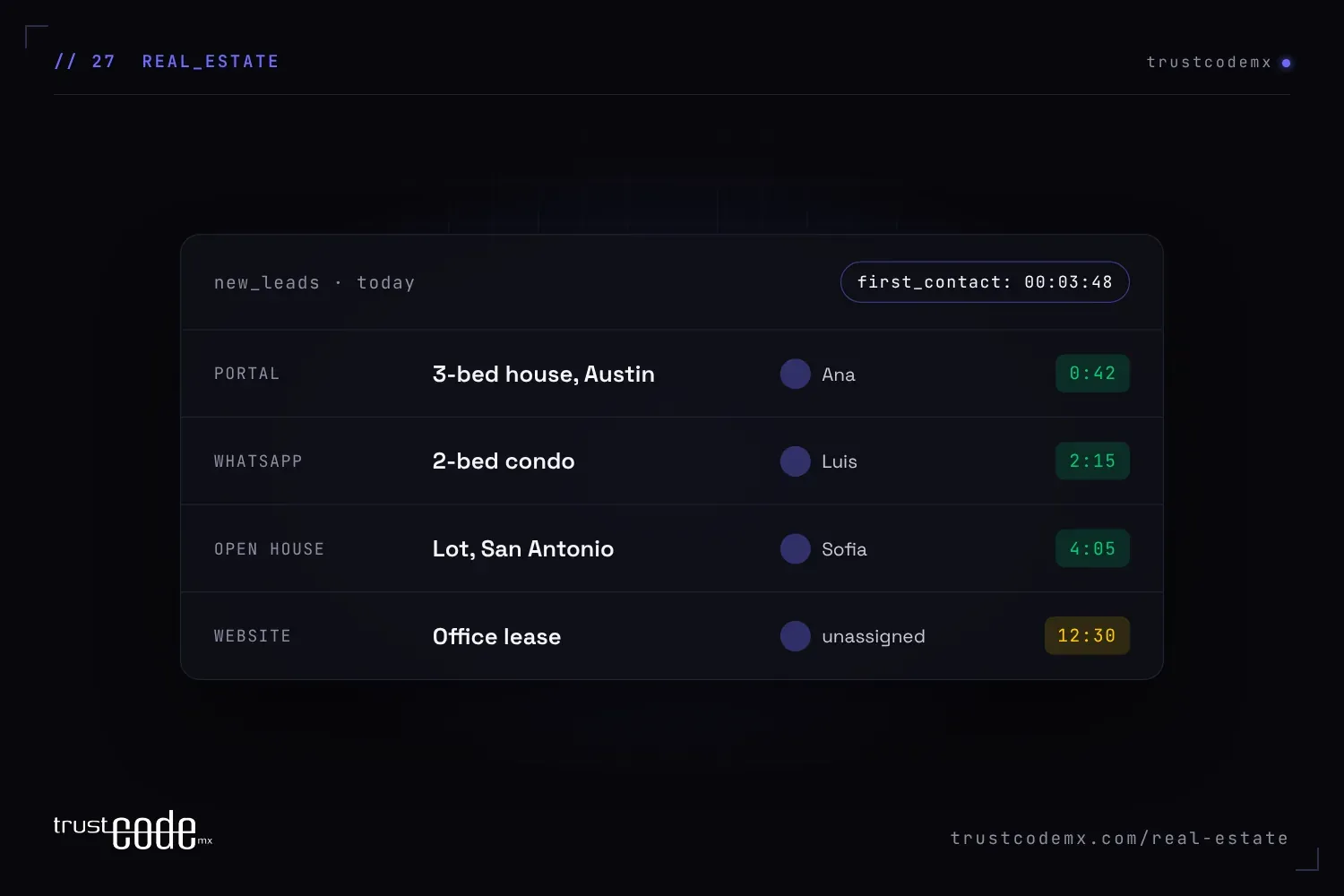
It’s 9:40 p.m. A buyer finds a listing she likes and sends an inquiry. The portal forwards it to an inbox that one agent checks in the morning. By 10:15, two other teams have already texted her back.
Nobody on your team did anything wrong. There just wasn’t a system that made the first response automatic.
What the research says about lead response time
The most cited study on this is still Harvard Business Review’s The Short Life of Online Sales Leads, which analyzed 1.25 million leads across 42 U.S. companies. Companies that tried to reach a lead within an hour were nearly seven times as likely to qualify it as companies that waited even one hour longer, and more than 60 times as likely as companies that waited a day or more.
The same research checked how fast companies actually respond. Only 37% answered within an hour, and the average response time was 42 hours.
The study wasn’t about real estate, but anyone who has worked portal leads knows the pattern. Interest peaks in the minutes after someone hits “send,” and it fades fast.
What “fast” should mean for your team
Fast doesn’t mean a robot pretending to be an agent. It means nobody waits in silence. Three targets work for most teams:
- First touch: under a minute, automatic. A text or email in the lead’s language that confirms you got the inquiry and tells them who will call.
- First real conversation: within 15 minutes during business hours.
- After hours: a clear promise you keep. “Carlos will call you tomorrow before 9 a.m.” And then Carlos does.
Why good teams are still slow
In almost every team we work with, slow response isn’t a people problem. It’s a structure problem:
- Leads live in five places. Portal emails, website forms, ads, open house sign-in sheets and agents’ personal phones.
- Someone has to decide who takes each lead. If assignment depends on the team leader being awake and at a screen, leads wait. The HBR researchers named distribution rules based on “fairness” as one of the reasons companies respond late.
- Nobody covers nights and weekends, which is exactly when many buyers browse.
- The Spanish-speaking lead waits for the one bilingual agent, who is already showing a house.
- Nobody measures it. You can’t improve a number you never see.
How to get your team answering in minutes
- One pipeline for every source. Every lead lands in the same place, tagged with where it came from. No more checking five inboxes.
- Automatic assignment. The lead goes to the agent on duty, or rotates through the team. If nobody makes contact within a set time, it moves to the next agent and the team leader gets an alert.
- An instant first message in the right language. If the inquiry came in Spanish, the first text goes out in Spanish.
- Alerts where agents actually are. A push notification on their phone, not a daily email digest.
- One number reviewed every week. Average time to first contact, by agent and by source.
What to review every Monday
- Average time to first contact, by agent.
- Percentage of leads contacted within 15 minutes.
- Leads with no contact after 24 hours. The goal is zero.
- Response time by lead source.
- Response time after hours compared to business hours.
Where to start this week
If you change only one thing, make the first response automatic and route every lead to a named person. That alone closes the biggest gap, even before you build anything else.
We build lead systems for real estate teams in English and Spanish: every lead captured, assigned and answered in minutes, live in six weeks.
Book your free assessment · 30-minute call. Free.
Frequently asked questions
What is speed to lead?
The time between a lead’s inquiry and your team’s first real contact. It’s one of the strongest predictors of whether that lead turns into a conversation.
Is an automatic text enough?
No. It buys you time and shows the lead you’re there, but it doesn’t replace a call from a real agent.
What’s a realistic response time for a real estate team?
An automatic first touch in under a minute, and a real conversation within 15 minutes during business hours. Start by measuring where you are today.